
Why Couples Wait for Help—and How to Start Earlier
Couples often delay support due to stigma, logistics, and uncertainty. Learn low-friction ways to build skills early—without committing to weekly therapy.
1) Why smart, caring couples still postpone support

Many couples delay help-seeking not because they don’t care, but because conflict is intermittent. When a tough week is followed by a “good” week, it’s easy to believe the problem solved itself—until the cycle repeats and becomes chronic. Add the fear of what seeking help might “mean” (“Are we failing?”), and the pressure to keep things private, and relationship health slips down the priority list.
Cultural narratives also matter. Dating couples may think therapy is only for married partners, while married couples may believe they should already “know how” to communicate. This creates therapy barriers rooted in identity and shame, not information. Even when couples want support, the path is unclear: Do you look for a couples therapist, read a book, take a course, or wait it out?
Logistics finish the job. Scheduling two calendars, finding a clinician, costs, and the lack of between-session structure can make getting started feel heavier than the problem itself—until the pain finally outweighs the friction.
2) The hidden psychology behind “we’re fine”—and what changes behavior
Delay often comes from normal cognitive shortcuts. Couples adapt to stress by minimizing (“It’s not that bad”), normalizing (“Everyone fights”), or postponing (“We’ll deal with it after this busy season”). These strategies reduce anxiety in the short term, but they also reduce action—classic behavior change friction. Meanwhile, conflict patterns become more rehearsed, making repair feel harder over time.
There’s also uncertainty about the “right” threshold for support. Many people equate therapy with crisis, so they wait for a dramatic event rather than responding to smaller signals: recurring defensiveness, avoidance after arguments, or a slow drop in affection. When support is framed as maintenance—like sleep, exercise, or preventive care—help-seeking becomes less loaded and more practical.
A useful reframe for couples: don’t ask, “Are we in trouble?” Ask, “Do we want fewer painful moments and more closeness?” That question shifts focus from blame to skills, and it opens the door to small, consistent actions that compound.
3) How to start earlier without committing to weekly therapy

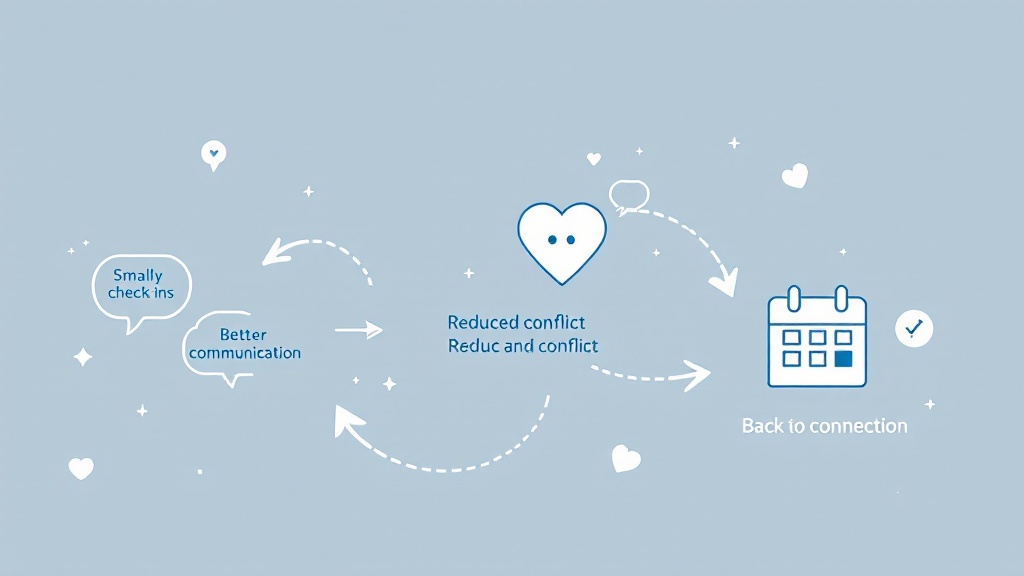
Start with a “minimum viable” routine that makes relationship health measurable. Choose 1–3 shared goals (e.g., “fight less,” “feel closer,” “repair faster”), then do a nightly two-minute private check-in: one appreciation, one stressor, one request. Keep it brief on purpose—low time cost increases follow-through, which is the core of behavior change.
Next, schedule one weekly two-person exercise (10–15 minutes). Pick a repeatable format: review the week’s best moment, name a recurring trigger, and practice a single repair skill (like a clean apology or a do-over). Put it on the calendar like any commitment. This creates “between-session structure” even if you never start sessions.
If you want more support, use a stepped approach: self-guided skills first, then escalate to clinician support when patterns feel stuck or emotions run high. Hybrid tools—like TogetherTune’s coordinated couple check-ins, gamified routines, and optional licensed couples sessions—can reduce therapy barriers by making help-seeking feel like starting a habit, not starting a crisis.